Archive | Dinners RSS feed for this section

The Most Wonderful Time of the Year

21 Dec

And no, I’m not talking about the song or saying this because it’s the holidays. I realize it might make me a bit grinchy, but I don’t like Christmas music. The one and only time I will permit Christmas music to be played in the house is during the decorating of the Christmas tree. I got my three hours of Christmas music in two weeks ago. And the Christmas tree looks beautiful. And yes, it’s real, so I won’t have any more people calling me bah-humbug.

For me, it’s the most wonderful time of the year because it’s roast season. It’s cold outside and cozy inside when you’ve got beef slowly cooking in the oven. I once told Jan that my favorite meal growing up was the beef stew my mom made with carrots and potatoes. That the beef fell apart with a fork and it was amazing. And I didn’t have to describe any more before he got to planning his own roast beef dishes.

Since then, he’s made Julia Child’s recipe for Boeuf Bourguignon, which I like to call “Beef Boring-Jan” (only works when you pronounce his name correctly like yawn), and I request this meal anytime I know we have a bit more time to cook dinner (it’s amazing and worth the time). He’s made slow-roasted beef spare ribs that fall off the bone. And last week, he made the classic roast that we got to enjoy for days.

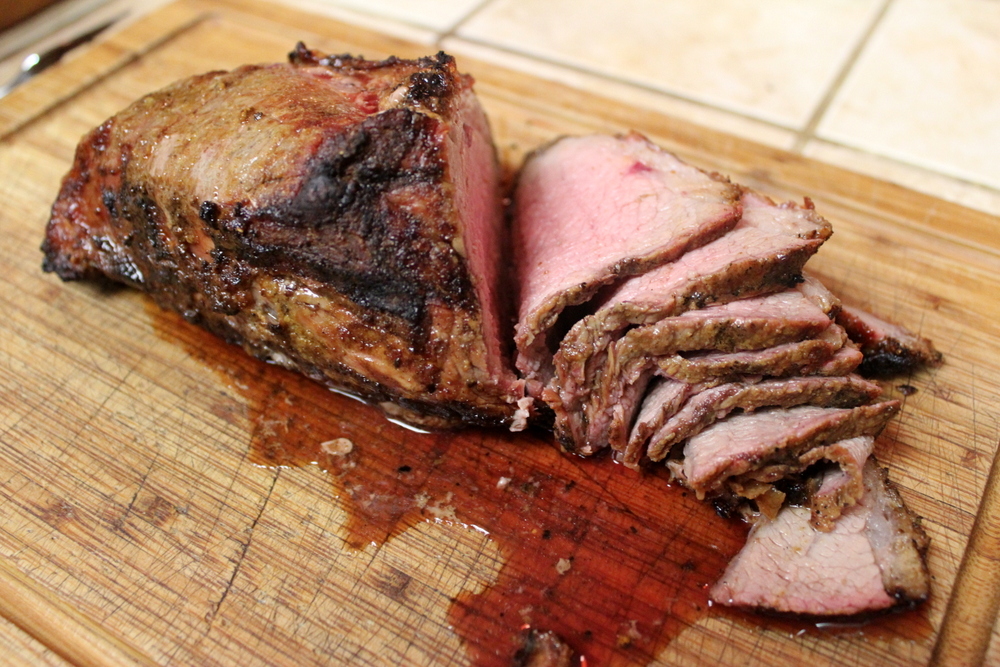
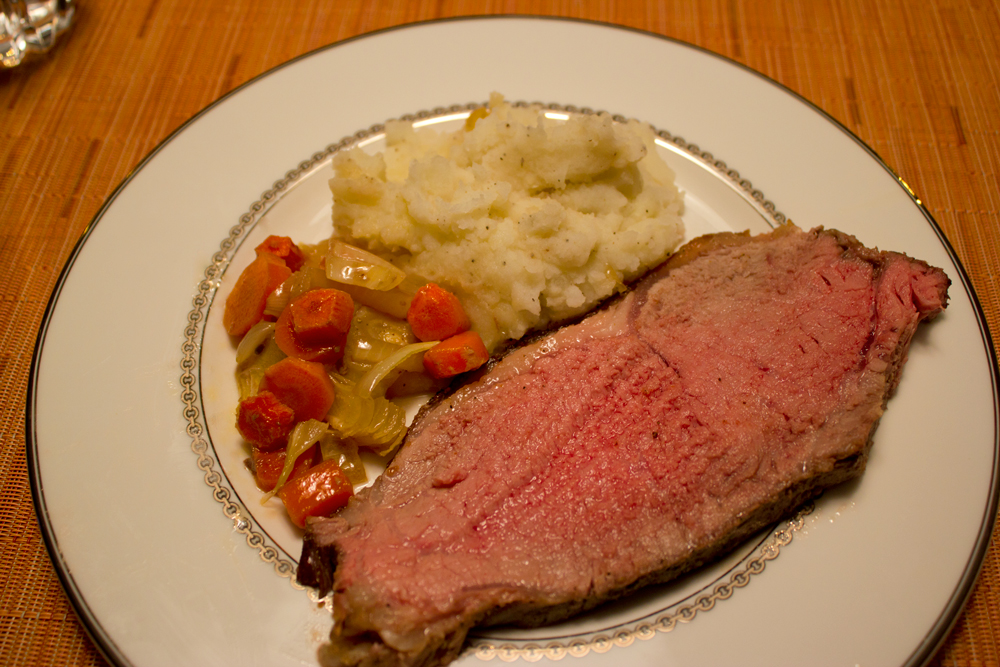
For this meal, perfect for warming even the biggest Christmas Grinch, Jan bought three pounds of New York Strip Loin Roast. Keeping the fat on the meat, he seasoned the entire roast with salt, ground peppercorns, onion powder, and garlic, and put it in pan over chopped carrots, onion, and a whole head of garlic. This was cooked in a 300°F oven, fat side up for approximately three hours until the internal temperature of the meat reached 135°F inside.

Roast before going into the oven

During the last hour of cooking, we added 1 cup of beef broth to the pan, to be used for making gravy for the mashed potatoes that would be served alongside the roast.

Once the meat reached the desired temperature, we took the roast out of the oven and let it rest for half an hour before serving. We had a delicious dinner of roast beef, mashed potatoes with gravy (made from adding the broth to a little bit of butter and flour), and the onions and carrots. I got everything mashed together on my plate just how I liked it.

Taking the roast out of the oven and letting it rest before serving

Then, only to improve upon the meal, a few days later we had French dip sandwiches made from the roast beef. When the meat was chilled, we cut thin slices, then cooked them in beef broth to serve with a toasty hoagie roll and a side of au jus. And again, a few nights later, when I was having dinner for one, I sautéed onions and tomatoes with a small amount of olive oil. I added about ¼ cup of beef broth to the onions and tomatoes, then toward the end of cooking, added the thinly sliced roast beef. I served this over a roll toasted with shredded Italian cheese.

The roast leftovers into delicious French dip

Finally, there was just enough roast beef left over for me to stop making sandwiches, and instead feed the rest to Benny as dog treats. And everyone in the house was happy. What can I say? I can’t get into that running-around-like-crazy-because-it’s-the-holidays spirit. Call me cynical for shying away from what I see as all the overly commercialized aspects of Christmas. But the rest of the stuff that goes along with the holidays? I’ll take the family and the food any day. And roast beef.

Lessons in Indian

21 Nov

Since my friend Anjali visited last year and Jan and I got our first lesson on cooking Indian food (see Indian Feast Masala), we were not very good students. Jan made one other dish from Madhur Jaffrey’s Quick & Easy Indian Cooking (Stir-Fried Green Cabbage with Fennel Seeds, or bhuni bahdh gobi) for me to bring to my book club when the food theme for that night was Indian (we were discussing The White Tiger), and then, we made nothing else for a while.

And then, in typical fashion for us, suddenly it was all about Indian food. Though I’ve never been a fan of curry, dinners out and about (at North India Bar and Grill and Malabar Restaurant in Santa Cruz) convinced me that there was so much more than curry to get me excited about Indian. I learned early on that I love naan, and also all the different pickles and chutneys that go along with them.

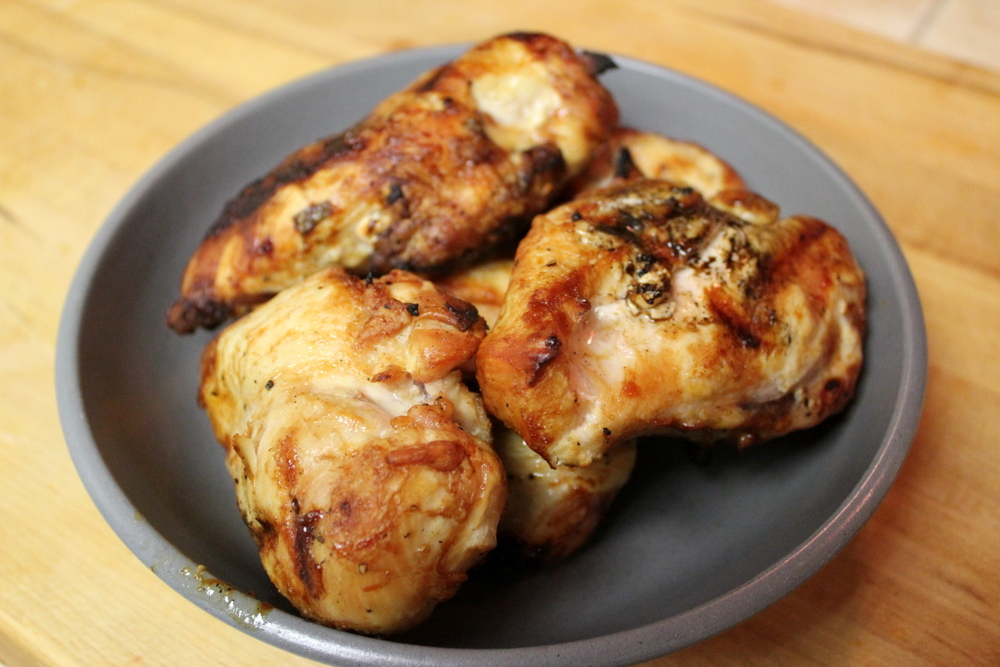
At home, we again made the onion fritters and lentils from our introductory lesson, and began to try some other recipes from the book (thanks again Laura!). An instant hit was the spicy grilled chicken or masalewala murgh, and we had fun sampling that with a few prepared chutneys.

One night, the combination of dishes was right on. With the chicken on the grill and the cabbage on the stovetop, we followed the recipe for Indian Mashed Potatoes or mash aloo.  We reserved a portion of the mashed potatoes that were prepared according to the recipe (delicious this way), and the other portion was an experiment sparked by something we’d heard about on a cooking show.  By searching for more Indian recipes online, we found what we were looking for: mashed potato balls, though the more appropriate name was batata vada, which translates to “potato fritters.”  To make them, we rolled ping-pong-ball-sized pieces of mashed potatoes into chickpea flour (besan) that had turmeric added to it. I deep fried the mashed potato balls until the outsides looked golden brown and crispy.

Mashed potato balls after a dusting of chickpea flour

Into the hot oil

Deep fried deliciousness

Since the mashed potato balls were so delicious, I decided we’d make them for an Indian food themed dinner party we were hosting.  And since I was so excited about my newly acquired tool for forming meatballs (looked like scissor handles with ice cream scoops on each end), I thought that would help me make perfectly shaped mashed potato balls.  That, however, proved to be a mistake.  Because I hadn’t formed the balls by hand, the potatoes were not firmly pushed into shape.  When they were deep fried, they quickly began to fall apart.  So after all that, what we ended up with was basically just mashed potatoes that had a lot more grease in them than if we’d just left them alone.

A few other lessons learned: the marinade for the spicy grilled chicken (following proper food safety and reserving some separately from what is used for marinating the chicken) makes an amazing sauce to dip naan, potatoes, cabbage, and anything else on the plate. Also, Trader Joe’s is a great place to buy naan—they offer several different varieties in their freezer section, and they heat quickly and perfectly in the oven at home.

Clockwise from top: Spicy Grilled Chicken, Stir-Fried Green Cabbage with Fennel Seeds, and Mashed Potato Balls

Now being perfected: Stir-fried Shrimp in an Aromatic Tomato-Cream Sauce (ghagari jhinga), and the cooling Yogurt with Tomato and Cucumber (timatar aur kheeray ka raita)

We still have many more lessons to learn in Indian cooking, but I’m enjoying all the taste-testing along the way. So far, the lentils have been the hardest to perfect, but I’ve been polling Indian friends for their tips (so far, the best seems to be soaking them overnight first, then using a slow-cooker or crock pot to prepare).

Here’s the recipe for spicy grilled chicken modified from the recipe in Quick & Easy Indian Cooking, and recipes for mashed potatoes and cabbage should follow in the weeks to come.

Spicy grilled chicken—masalewala murgh

print recipe

INGREDIENTS

  • 2 pounds boneless chicken thighs or breasts

For the marinade and sauce

  • 1 tablespoon garam masala
  • 2 teaspoons ground peppercorns
  • 2 teaspoons oregano
  • 2 teaspoons cumin
  • 1 teaspoon salt
  • 1 teaspoon paprika
  • ½ teaspoon cayenne pepper
  • ¼ teaspoon turmeric
  • 1 clove garlic, crushed
  • 2 tablespoons lemon juice and some zest
  • 1/2 cup plain yogurt, plus an additional 1/2 cup to use later to make the dipping sauce
  • ½ cup canola oil

METHOD

  1. Combine marinade/sauce ingredients in a medium bowl.
  2. Divide contents in half; use half to coat chicken and let marinate sit for 2 to 4 hours in refrigerator.
  3. Barbecue or grill chicken until done, approximately 10 to 15 min.
  4. With the reserved marinade (not what was used with the chicken), add additional ½ cup yogurt and mix thoroughly to serve as a dipping sauce.

Swedish Meatballs

2 Oct

It hasn’t been dinner as usual at the Our Life in Meals household recently. During the past few weeks, Jan sent me updates (and photos) of various barbecue eaten across the Southwestern United States as he fought forest fires in Texas and Arkansas (driving there and back and seeming to stop at every barbecue joint along the way). Needless to say, I’ve gone through a few rotisserie chickens and boxes of cereal (not for the same meal, of course) while he was gone.

And because I’d let several weeks go by without posting to Our Life in Meals, the harder it became to begin again. Even once Jan returned home, I felt that we had to prepare some amazing meal for me to break the ice.

But it turned out that a seemingly standard dinner might do the trick when Jan and I combined our heritage to prepare one of the best meals we’ve had in months. After many batches of experimentation, I finally perfected my recipe for making the Swedish meatball sauce. The sauce isn’t as thick as what you might call “gravy,” but it’s perfect for drizzling over mashed potatoes. And the dynamite cultural combination came from serving the Swedish meatballs and mashed potatoes with Czech apple-braised cabbage—proof that the Czechs and Swedes are a perfect match!

To make the meatballs, Jan combines cuts of pork and beef, running them through the meat grinder before adding salt, pepper, fresh parsley, egg, and bread crumbs. He pan fries the meatballs to brown them on all sides, then finishes them in the oven. After that, it’s my job to make the sauce, while he checks on the mashed potatoes and cabbage. When everything is ready, serving with lingonberry sauce is a must.

We freeze half the meatballs for later, and enjoy the rest for dinner

After meatballs are cooked in the oven, use the pieces from the pan to make the sauce

Adding the meatballs back into the sauce

Ready to serve

Swedish Meatballs

Print recipe

INGREDIENTS

Meatballs

  • 1 pound ground beef
  • 1 pound ground pork
  • ½ medium onion, small dice
  • 2 cloves garlic, minced
  • 1 tablespoon soy sauce
  • 1 egg
  • ½ cup bread crumbs
  • 1 tablespoon parmesan cheese
  • ¼ teaspoon each: salt, pepper, oregano, basil, parsley
  • 1/8 teaspoon hot paprika

Sauce

  • 2 cups water
  • 2 teaspoons beef bouillon
  • 2 tablespoons flour
  • 2 tablespoons sour cream

METHOD

  1. Combine all meatball ingredients with hands in a large bowl.
  2. Form into balls slightly smaller than the size of a ping-pong ball.
  3. In an oven-safe pan (no plastic handles!), fry meatballs in olive oil over medium-high heat until browned.
  4. Place pan in a 350ºF oven about 15-20 minutes or until the meatballs are cooked through.
  5. To make the sauce, remove pan from oven and use tongs to set aside the meatballs in a bowl or plate. Reserve fat and juices left in the pan.
  6. To the pan, add 1 cup water with bouillon and flour, stirring immediately so that flour does not clump.
  7. Stir mixture occasionally over medium heat until the sauce thickens, approximately 10 minutes.
  8. Add sour cream and stir until combined.
  9. Return the meatballs to the pan with the sauce, stirring gently to coat. Keep on medium heat until meatballs are entirely coated and sauce thickens greater.
  10. Serve with mashed potatoes and lingonberry sauce.

Lomo Saltado: A Taste of Peru

15 Jun

The commercials for Match.com state that today, one in five relationships begin online, and I believe it. These days, it seems like everyone knows somebody who’s found their significant other through a dating site, and as someone who never experienced online dating (and is thankful for it after some of the stories I’ve heard!), I’m amazed.  Across counties, cities, and countries, people are able to meet online and eventually meet in person and get to know each other.

This is how one our good friend Ken met his fiancé, who will soon be on her way from Peru to begin her life here in Fresno, California.  Though we haven’t met her yet, Jan and I are excited to welcome her here when she arrives.  So when we found ourselves passing by a Peruvian restaurant during a trip to Anaheim earlier this year, it was the perfect opportunity to both taste something new, and be able to report that we had, in fact, tasted Peruvian food.

We were told that one of the signature dishes of Peru was Lomo Saltado, made with thin strips of beef sirloin cooked with onions and tomatoes and served with white rice and French fries.  As the dish came to the table, I smelled the beef and onions, with a hint of mouth-watering Chinese food aroma thrown in.  While I was initially thrown off by this unlikely combination of scents and flavors, as I ate, that didn’t matter so much—it tasted good.

Lomo Saltado reminds me of a few things I love: beef fajitas, chili cheese fries, and Asian stir fry.  Not dishes I would ordinarily group together in the same sentence, but somehow, it seems to work.  After all, I wouldn’t give a second thought to eating a steak sandwich with onions and tomatoes along with a side of French fries.  So if I could get that same meal without the bread, why not?

On every table of the restaurant, there was also a large bottle of green sauce in a clear squeeze bottle.  I kept tasting the sauce over and over, feeling like there was something familiar in it, but was unable to put my finger on it.  I asked the waitress what was in the sauce, but she only shrugged her shoulders and said she didn’t know.

At home, we researched recipes in order to recreate Lomo Saltado in our own kitchen.  The first time we made it, Jan quickly sautéed the beef and served it over a bed of steak fries (we skipped the white rice).  With plenty of juice from the beef to drizzle over the potatoes, the meal was delicious.  But then, Jan made the dish again, this time with the green sauce, and that was what took the dish up to the next level.  Turns out, that familiar, yet unidentifiable ingredient from the restaurant’s green sauce was feta cheese, something I hadn’t even considered a possibility.

Stir frying the onions, beef, and tomatoes

Before getting "sauced"

To someone from Peru, our Lomo Saltado might taste far from authentic, but at least they might appreciate the effort, we figured.  Jan and I talked about how we could serve the dish and do our best to help Ken’s fiancé feel at home.  We patted ourselves on the back, grinning and feeling proud of ourselves.  We told Ken we were ready for her to get here.  But then he only laughed, and told us that she was a vegetarian.

I sighed, shaking my head.  Well, I thought, of course I would have known that if I’d seen her profile.  Guess I still haven’t caught up to these online times.  With a few spears of asparagus and romaine lettuce as tasting vehicles, I determined another fact: the green sauce doubles as a great salad dressing.

Lomo Saltado

print recipe

Ingredients

  • 1 lb beef sirloin
  • 2 large tomatoes
  • 1 medium onion
  • Frozen or freshly prepared French fries

For the marinade

  • 2 teaspoons soy sauce
  • 2 tablespoons red wine vinegar
  • 1 clove garlic, minced
  • 2 tablespoons canola oil
  • Salt and pepper, to taste

For the green sauce

  • 1 cup cilantro
  • ½ jalapeno, seeded
  • 4 oz. feta cheese
  • ¼ cup olive oil
  • ¼ cup canola oil
  • ¼ cup water
  • 2 teaspoons red wine vinegar
  • Juice of 1 lime
  • Salt and pepper, to taste

Directions

  1. Slice the beef into thin strips and set aside.
  2. Combine the ingredients for the marinade in a medium bowl, then add the beef strips and stir until coated.
  3. Marinate in the refrigerator for about an hour.
  4. While the beef is marinating, make the green sauce.  Use a food processor to combine cilantro, jalapeno, feta cheese, olive oil, canola oil, water, vinegar, lime juice, salt, and pepper.  Pour into desired serving container and set aside.
  5. Before removing the beef from the refrigerator, slice the tomatoes and onion into large pieces.
  6. If cooking the French fries in the oven, allow enough time to begin heating according to package directions.  If deep frying the French fries, fry in batches while the beef is cooking with the onions and tomatoes on the stovetop.
  7. Begin sautéing the onion until it begins to brown.  Add the beef to the pan including any remaining liquid from the marinade.
  8. Sauté until only a little pink remains on the meat, then add the tomatoes.
  9. Stir and cook until the beef is completely cooked.  Serve over a bed of French fries, drizzling the green sauce on top or serving the sauce on the side.

Colossal shrimp and quinoa

2 Jun

Seems like I’ve been hearing about quinoa everywhere lately, so realizing I’m probably far behind the times, I decided it was finally time to give it a try. A staple food in South America, quinoa (“keen-wah”) is a grain known for its high protein content. It can be used as a side dish, where rice or pasta might ordinarily be used, or cooked as a part of the main meal.

We found a box of organic quinoa at Trader Joe’s and cooked it according to package directions. Instructions stated that it could be cooked in rice or broth, and we used chicken broth, since we figured that would give the grain a greater depth of flavor.

Jan barbecued colossal shrimp (the actual name given to this size of shrimp I preferred calling “monstrous”), and served the shrimp alongside sautéed spinach and the quinoa. To accompany the shrimp, he prepared a cucumber-yogurt sauce and added a handful of chopped cilantro for some more zest.

Though I was in awe of the massive shrimp on my plate, my first bite was of the quinoa, since that was the item I was most curious about. Once cooked, part of the tiny round grains became translucent, and I was reminded of couscous in both appearance and taste. Despite being cooked in broth, there wasn’t much flavor to the quinoa, though it was complimentary to the other foods on the plate, and combining the quinoa with the yogurt sauce was a great marriage of flavors and textures.

Translucent/opaque quinoa grains

Even though I don’t think quinoa is going to become my go-to grain for a side dish, I was glad I could finally taste what all the buzz was about. Having something quick and easy to cook gives us some variation, and I’d like to try some additional quinoa combinations in the future.

Homemade pasta

3 May

A few years ago, when Jan and I first moved into our house from our apartment, our new kitchen seemed like a vast amount of space in which we’d never run out of room for plates, pots and pans, kitchen tools, and gadgets.  Moving up from a tiny galley kitchen into a space with more than two under-counter cabinets, three wall cabinets, and two drawers, this feeling lasted for a while.  But then, the inevitable happened, I began using the hall closet as our overflow pantry, storing “fancy” glassware, infrequently used roasting pans, a dutch oven, miscellaneous utensils, and a growing collection of kitchen gadgets.  Then, after this space got full, a shelf in my office became dedicated to a varied collection of plates and serving dishes.

For about a year, I moved a large rotisserie oven from space to space in an effort to find a suitable location for it to be stored.  Not once in this period did we use the gadget.  Finally, we found a friend who was thrilled by the idea of making his own rotisserie chickens, and I was thankful I could reclaim those precious cubic feet in the closet.

I realized then that this is what kitchen gadgets do.  The made-for-TV numbers don’t last long enough to get much use, but the others, if they are built to last, get passed from person to person until hopefully they find their “forever” home.

After all, the rotisserie oven came from my dad, and before that, was owned by my grandmother.  The ice cream maker that I loved to death during the summer (Well that’s just peachy and Danger! Ice cream machine in the house) was borrowed from my brother in law after he tired of it, and it’s been months since I’ve made ice cream (though after receiving the Bourbon-Madagascar Vanilla beans mail-ordered by Jan, that will come out again soon).  And the water bath that made only a few appearances (This meal brought to you by sous vide and Why sous vide is not for me) was banished to Jan’s man room out of my unwillingness to grant it any closet space, and is now the object of my unsubtle hints to sell the thing on eBay, where it came from.

Back in July, when making stuffed pasta shells, I wrote that the pasta machine epitomized my fear of being taken over by kitchen gadgets (One step closer to a pasta machine).  Of course, not soon after that, some friends asked us if we would like their pasta maker and ravioli maker.  They said that they, in fact, actually used them with excellent results, but were opting for newer models that would attach to their stand mixer.

So, like so many kitchen gadgets do, the pasta machine got a new home.  The boxes sat in the closet among their friends, untouched, for several months, until an evening in which Jan and I were stumped at what to cook for dinner.  We wanted something different, to make something we never had before, when it hit us: it was finally time to make our own pasta.

We made a big ceremony of bringing out the pasta machine and tightening the screw to fasten it to the countertop.  I mixed the simple dough of flour, olive oil, and egg in the stand mixer and let it rest about ½ an hour before rolling out.  Adding extra flour until the dough was no longer super-sticky, I formed smaller balls to pass through the pasta machine, getting thinner and thinner with each roll.  Finally, I passed the sheet through the part that cut it into noodles.

First pass through the pasta machine

Showing off the results

The results weren’t the prettiest pasta noodles I’d ever seen, but I was going for rustic anyway, so I wasn’t concerned.  After laying out a pile of noodles, I put away the pasta machine and let Jan take over in the kitchen, to make the sauce to top our homemade pasta.

The pile of pasta noodles

We couldn’t decide what route was best for tasting the fresh flavor of the pasta, so Jan opted to make two versions.  One was red sauce with Italian sausage, another was vegetables sautéed with olive oil and a little bit of cheese.  When we took the first bite, we were amazed.  Neither of us had anything like it before.  We realized, aloud, that we had actually never tasted freshly made pasta; otherwise, there would be no forgetting the taste.  We couldn’t figure out why more Italian restaurants didn’t make their own fresh pasta, since we decided that would be the sure-fire way to have a line of customers out the door.

Despite the labor-intensive process, making fresh pasta is definitely something we will do again, the results were that delicious.  And yes, this runs counterintuitive to my usual disdain for kitchen gadgetry.  For the moment, the pasta machine is resting comfortably in the closet, confident it has a place (for a while, at least) among the kitchen gadgets.

A Tostada Time Out

23 Mar

So much tiling, so much corned beef!  Phew!  Last week was exhausting!  With so much going on, Jan and I needed some delicious, quick, and easy-to-prepare food.

Enter the tostada dinner, an amazing meal that requires minimal time and effort.  When Jan brought home tostada shells (shortcut #1), we took a few more shortcuts to cook up a batch of tostadas in a matter of minutes.  It was such a surprisingly tasty dinner that we ate the same meal twice in the same week.

I started by sautéing some onions in a little bit of oil in a pan.  Once the onions started to become translucent, I added ground beef (didn’t grind our own this time, so shortcut #2) and spices to make my own blend of taco seasoning.  The blend included garlic powder, California chili powder (it’s not too spicy, but gives you that great reddish-brown color usually only achieved by pre-mixed taco seasoning), cumin, oregano, chili flakes, and salt.  I combined the meat with the spices, added a few tablespoons of water, and cooked over medium heat.

While the meat was cooking, I began heating up the beans (shortcut #3 is canned beans.  Jan prefers the refried beans while I prefer black beans, so we compromise by alternating which one we choose.)

This is also the time to start getting all the toppings ready, so we finely chopped lettuce or green cabbage (we usually stick with iceberg lettuce for beef tostadas or tacos, but use green cabbage on occasion, and definitely when making fish tacos).  We also got out sour cream and salsa from the refrigerator to add to our tostada-assembling station.  We shredded some Colby Jack cheese and made guacamole from a fresh avocado (there’s room for another shortcut here if you use the pre-made guacamole, I recommend both the Trader Joe’s and Costco varieties).  The last piece was the Tapatio.

Ingredients prepped, tostadas ready to assemble

Once the meat was done and beans were heated, it was time to assemble the tostadas.  Atop the shell, I started with the beans, then added the meat, then the lettuce and the rest of the toppings.  Inevitably, my tostadas were overloaded, and I had to break out my fork.  Then I enjoyed my tostadas and debated when I should tell Jan about his sour cream mustache (think milk mustache, but thicker).  In the meantime, we reflected on a successful corned beef and cabbage celebration.

Our first guest to arrive found a four-leaf clover in our front yard walking up to the front door (unfortunately I didn’t capture a picture of our good luck charm, but thanks to a lovely thank-you note from my friend Sarah, I have an image that looks pretty close to the original).

Jan cooked the massive amount of corned beef in a 15 gallon pot outdoors, and it was enough to fill one 2-foot by 1-foot wide chafing dish.  Our other full-size chafing dish was filled with green cabbage and potatoes.  I was amazed that everything was eaten pretty quickly—either everyone was starving, or the food was pretty good!

Despite both the orange of my carrot cake cupcakes not being the orange I desired, nor the green cream cheese frosting (I was going for the orange and green of the Irish flag but instead got the two unappetizing colors of rust orange and Easter egg green), those all got eaten too.  And lastly, for those dying to see what all the fuss over the tiled floors was about (see last week’s Prepping for St. Patrick’s Day), a picture of the newly installed tile.

For the moment, we’re taking at least a month’s break from tiling and large-scale entertaining.  We’re going to be lazy for a while.  Good thing we discovered the perfect lazy-night dinner.  I have a feeling we’re going to be eating a lot of tostadas.

Prepping for St. Patrick’s Day

15 Mar

If someone questioned our sanity right now, I wouldn’t blame them.  About a month ago, Jan and I began a serious home-improvement project.  Fed up with carpet and linoleum that didn’t stand up to our frequent entertaining and furniture re-arranging, we opted for one of the most durable and low maintenance flooring surfaces we could find: porcelain tile.  With the goal to replace all the floors in our house with beautiful 18”x18” tiles, we began in the living room/hallway/dining room, since all the other rooms in the house branched from that central axis.

Gung-ho to complete the project ourselves, we delved right in, and since Jan had installed tile before and I’d installed laminate flooring, we had great confidence in our ability to get it done quickly and efficiently.

The tiling was a lot more work than we’d anticipated, and a month into the project, it still feels like we’ve only just begun.  We started with enthusiasm, but after working at our jobs all day, it was difficult to get motivated to come home only to do some seriously strenuous physical labor.  In addition, as I’m sure many can relate, working harmoniously on a DIY project with your significant other is one of the biggest challenges a person can undertake.  While well-meaning friends shared statistics in jest about DIY projects being a contributing factor in many a divorce, I started to wonder if there was more merit to the numbers than I’d previously thought.

Choices, choices, choices.  Tile, or relax?  Spend the evenings and weekends happy and peaceful, or engaged in a heated debate over the “levelness” of one particular tile?  The project didn’t always win out.

But sometimes the only way to get things done is with a deadline, and we definitely had one looming.  Hosting a big celebration for St. Patrick’s Day has started to become a tradition at our house.  Right around this time, Jan gets excited and antsy, scanning the grocery store ads for the exact moment when corned beef goes on sale for $1/pound.  Last year, Jan cooked 10 pounds of corned beef on St. Patrick’s Day, and last week, he came home with 33 pounds of corned beef ($.99/lb at Fresh and Easy, and with the “Limit 2 per customer” difficult to enforce at a store that only employs self checkout lines, Jan may have gone overboard.)

Mountains of corned beef

With guests expected to help eat the corned beef, I knew we couldn’t welcome them into a halfway-tiled space they had to tiptoe over.  The corned beef would make us finish, whether we wanted to or not.

Corned beef and cabbage used to be one of those things I liked to have once a year, and once a year only.  You wouldn’t catch me thinking, hmm, I’m craving corned beef and cabbage for dinner (like Jan does).  But it might be one of those dishes that grow on you.  I’m starting to think I could have it about twice a year and be OK.

Good thing too, since Jan was so excited to celebrate, he decided to do a test run of the corned beef and cabbage.  Besides, it was a welcome break from tiling, and with our approaching deadline, we were actually making good progress.  We opened up one of the packages and after trimming off as much fat as we could, cooked according to the package directions using the included spice packet.  The general rule is to cook for one hour per pound, adding the cabbage and potatoes in the last half hour of cooking.

Green cabbage, corned beef, and red potatoes

To wash it all down, we made Black and Tans, using Guinness Draught and Harp Lager.  To prepare, we filled the glasses about 1/2 of the way with the light colored beer (Harp Lager), then poured the dark beer (Guinness Draught) over an upside-down spoon to fill the remainder of the glass without splashing and mixing the two layers.

Pour the Guinness over the Harp Lager

Much-needed refreshment

We sat together in the hallway (dining table moved there in order to tile the floor of the dining room), eating our corned beef, sipping the beer, and admiring our newly laid tile.

“It looks so good, I think it was worth it,” Jan said.  I gave him a sideways glance.  “Worth the amount of work, and worth almost getting divorced,” he said with a smile.

I had to agree with him.  It did look great.  In retrospect, it wasn’t that bad.  Apparently we agreed on more things than we thought, including that the corned beef and cabbage was delicious.

While we might have only completed a fraction of our big project, and probably won’t lay another tile for another six months, we’ve got everything we need: a completed dining room, a completed living room, and 31 pounds of corned beef.

Crab Legs Save the Day

24 Feb

I had a disheartening day of baking.  (Note: if you just want to hear the crab legs, skip to the last paragraph of this post.  Keep reading to see why the simplicity of boiled crab legs is sometimes the only answer.)  I thought I would be brilliant and make Czech Kremrole, a cream-puff-type dessert Jan has been talking about wanting to eat for months.  I found a recipe in my Czech cookbook and Googled Kremrole, to see what the dish should look like.  I made a trip to Sur La Table to get stainless steel cannoli tubes around which I would wrap pastry dough, bake, then fill with whipped cream and top with powdered sugar.

It didn’t seem too tough, until I realized the dough the recipe book called “puff paste” was the painstakingly made puff pastry.  But I was determined to make these treats for Jan.  I made my two doughs, the butter dough and the strudel dough, and followed the tedious steps of folding the butter dough into the strudel dough, folding in thirds, thirds again, and refrigerating for an hour.  Three times I did this rolling-out, folding into thirds then thirds again, then refrigerating.  When it was time to wrap the dough around the tubes, everything looked beautiful as I placed them in the oven.

Despite following each of the recipe’s steps, the Kremrole was a disaster—the butter was literally melting off the dough and pooling in the baking sheet.  I can’t even share a picture, it’s just too sad to show.  To make matters worse, I realized I could have just bought premade puff pastry earlier in the day at the store.  But of course, that was before I read through all the recipe steps, experienced it firsthand, and now know that puff pastry is not something for the amateur to attempt at home (or else something that takes a lot of practice to master).

I thought I could save the day by making something else that involved filling a pastry with whipped cream, something I was craving, and that I’d made many times before.  Semlor, or Swedish Fat Tuesday Buns are the Swede’s version of indulgence before Lent, something my mom and I used to make every year around this time of year.  They are basically a cardamom-spiced sweet roll that has been filled with marzipan and whipped cream, and I thought I could redeem my failed cream rolls with a successful batch of Fat Tuesday Buns.

I baked the buns, no problem.  I cut the tops off the buns, removed the inside, and got to work making the filling.  Only problem was, I was distracted and grabbed the container of what I thought was powdered sugar in the pantry.  When I tasted my whipped cream to see if I’d achieved the correct level of sweetness, I knew something was terribly wrong.  It was then that I turned the container around to read the dreaded words: corn starch.

It was just not my day.  But then, as I too was about to turn into a sobbing mess of puff pastry gone melty and whipped cream gone chalky, Jan pulled out a 2 pound bag of snow crab clusters from Fresh and Easy.  In a matter of minutes, he boiled the crab legs, boiled some shrimp, and boiled some corn on the cob.  And the day was saved by Jan and a big boiled feast.  I was so hard at work with the shell cracker, trying to get the crab meat out so I could squeeze lemon juice on it and dip into melted butter, all my baking problems faded away.  Well, of course, after I strategized my game plan for reattempting those baking projects another day.

My Kind of Thistle

17 Feb

I’ve always loved artichokes.  It may have something to do with the fact that any time I’ve eaten an artichoke, there’s always another rich ingredient involved, whether that’s mayonnaise, butter, oil, or cheese.  Growing up, I dipped the leaves of the steamed artichoke in plain mayonnaise, scraping the soft bit at the bottom of the leaves with my teeth.  At a friend’s, I ate grilled artichoke drizzled with lemon butter, at home, marinated artichoke hearts from a jar full of olive oil.  And of course there’s always the wonderful spinach-artichoke dip that adds in cream cheese and Parmesan cheese.

But it’s not just the fattening toppings that make artichokes great.  There’s something special about them—not only do they look unique, but the way they’re eaten is also unusual.  Artichokes are thistles, plants whose flowers develop into large, edible buds.  And the first person to figure out that this scary looking thing was edible?  They were brave.  I love the earthy flavor of artichokes, and after recently learning that they are full of fiber and antioxidants, I feel even better about eating them.

Last year we planted an artichoke plant in our garden, which produced one large artichoke and one mini artichoke.  However, I left both on the plant too long, and they developed purple flowers at the top, becoming inedible.  The master gardener at the Vineyard Farmer’s Market said this particular plant would bear three artichokes the first year, ten the next year, and possibly more in the years after that.  With the plant now in its second year, I have high hopes for my ten artichokes (though they haven’t yet to make their appearance).

Artichoke growing in our garden

Though we’ve been using a gas grill for years, after the excellent dinner Jan cooked with an original Weber in Los Osos (see Favorite day in Morro Bay), he had to buy his own, and has been having fun lately using charcoal to barbecue just about anything.  I was skeptical of the artichokes that had been steamed to cook about two-thirds of the way (about 30 minutes), then sliced in half and finished on the grill.  But of course, they were excellent with the added flavor from the charcoal.

Great smoky flavor from the grill

Still, my favorite way to eat them is the simple way.  I cut the stem to leave about an inch at the bottom, cut an inch off the top, and use scissors to cut the sharp points from the leaves.  Then the artichokes are placed stem-side up in a steamer basket and left to steam for about 50 minutes.  The artichokes are done when the lower leaves can be removed easily and are tender.

And continuing to keep things simple, the artichokes are served with balsamic-lemon mayonnaise, whose title reveals three of the sauce’s four ingredients.  Despite all the delicious possible ways to eat an artichoke, in my opinion, this is the easiest and best.

Balsamic-lemon mayonnaise

To be served alongside steamed or grilled artichokes

Print recipe

Ingredients

  • 5 heaping tablespoons light mayonnaise
  • ¼ teaspoon balsamic vinegar
  • ¼ teaspoon lemon juice
  • ¼ teaspoon finely ground black pepper

Directions

  1. Combine all ingredients in a small bowl and stir well.
  2. Refrigerate until ready to serve.
Follow

Get every new post delivered to your Inbox.

Join 165 other followers