Prepping for St. Patrick’s Day

If someone questioned our sanity right now, I wouldn’t blame them.  About a month ago, Jan and I began a serious home-improvement project.  Fed up with carpet and linoleum that didn’t stand up to our frequent entertaining and furniture re-arranging, we opted for one of the most durable and low maintenance flooring surfaces we could find: porcelain tile.  With the goal to replace all the floors in our house with beautiful 18”x18” tiles, we began in the living room/hallway/dining room, since all the other rooms in the house branched from that central axis.

Gung-ho to complete the project ourselves, we delved right in, and since Jan had installed tile before and I’d installed laminate flooring, we had great confidence in our ability to get it done quickly and efficiently.

The tiling was a lot more work than we’d anticipated, and a month into the project, it still feels like we’ve only just begun.  We started with enthusiasm, but after working at our jobs all day, it was difficult to get motivated to come home only to do some seriously strenuous physical labor.  In addition, as I’m sure many can relate, working harmoniously on a DIY project with your significant other is one of the biggest challenges a person can undertake.  While well-meaning friends shared statistics in jest about DIY projects being a contributing factor in many a divorce, I started to wonder if there was more merit to the numbers than I’d previously thought.

Choices, choices, choices.  Tile, or relax?  Spend the evenings and weekends happy and peaceful, or engaged in a heated debate over the “levelness” of one particular tile?  The project didn’t always win out.

But sometimes the only way to get things done is with a deadline, and we definitely had one looming.  Hosting a big celebration for St. Patrick’s Day has started to become a tradition at our house.  Right around this time, Jan gets excited and antsy, scanning the grocery store ads for the exact moment when corned beef goes on sale for $1/pound.  Last year, Jan cooked 10 pounds of corned beef on St. Patrick’s Day, and last week, he came home with 33 pounds of corned beef ($.99/lb at Fresh and Easy, and with the “Limit 2 per customer” difficult to enforce at a store that only employs self checkout lines, Jan may have gone overboard.)
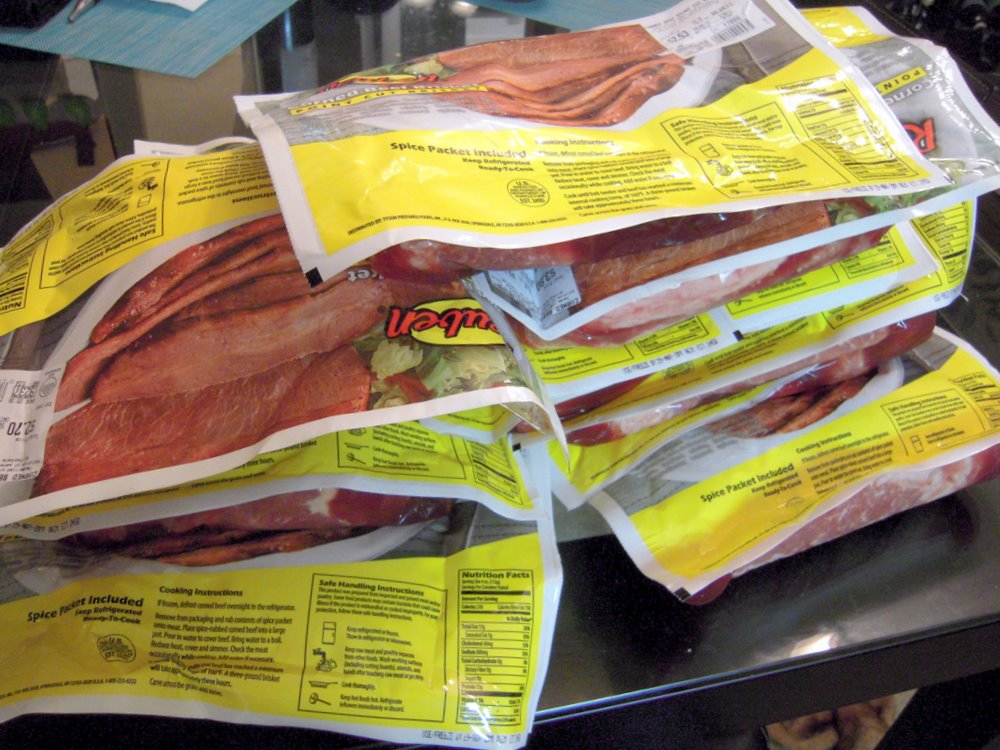
Mountains of corned beef

With guests expected to help eat the corned beef, I knew we couldn’t welcome them into a halfway-tiled space they had to tiptoe over.  The corned beef would make us finish, whether we wanted to or not.

Corned beef and cabbage used to be one of those things I liked to have once a year, and once a year only.  You wouldn’t catch me thinking, hmm, I’m craving corned beef and cabbage for dinner (like Jan does).  But it might be one of those dishes that grow on you.  I’m starting to think I could have it about twice a year and be OK.

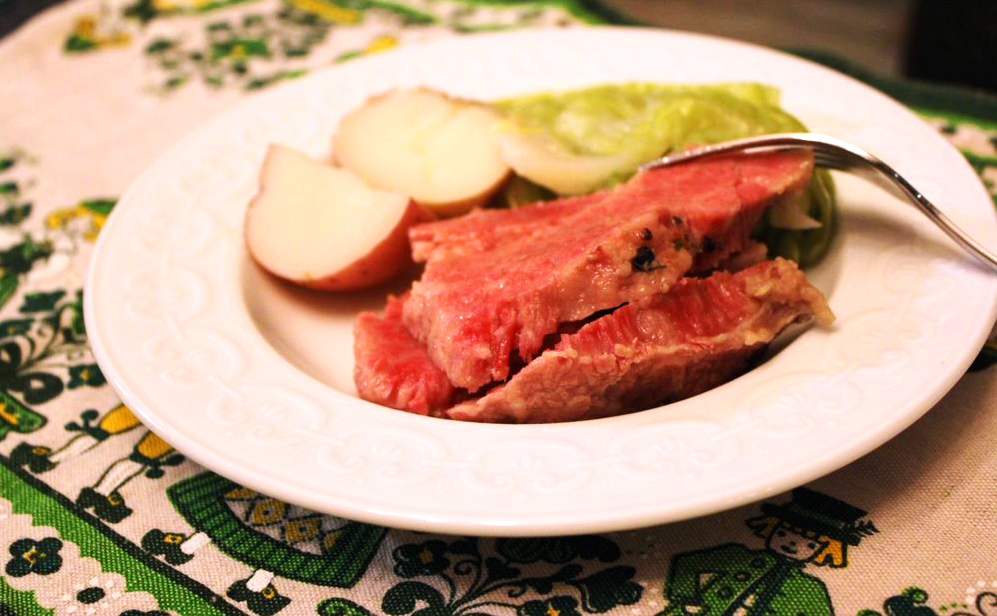
Good thing too, since Jan was so excited to celebrate, he decided to do a test run of the corned beef and cabbage.  Besides, it was a welcome break from tiling, and with our approaching deadline, we were actually making good progress.  We opened up one of the packages and after trimming off as much fat as we could, cooked according to the package directions using the included spice packet.  The general rule is to cook for one hour per pound, adding the cabbage and potatoes in the last half hour of cooking.

Green cabbage, corned beef, and red potatoes

To wash it all down, we made Black and Tans, using Guinness Draught and Harp Lager.  To prepare, we filled the glasses about 1/2 of the way with the light colored beer (Harp Lager), then poured the dark beer (Guinness Draught) over an upside-down spoon to fill the remainder of the glass without splashing and mixing the two layers.

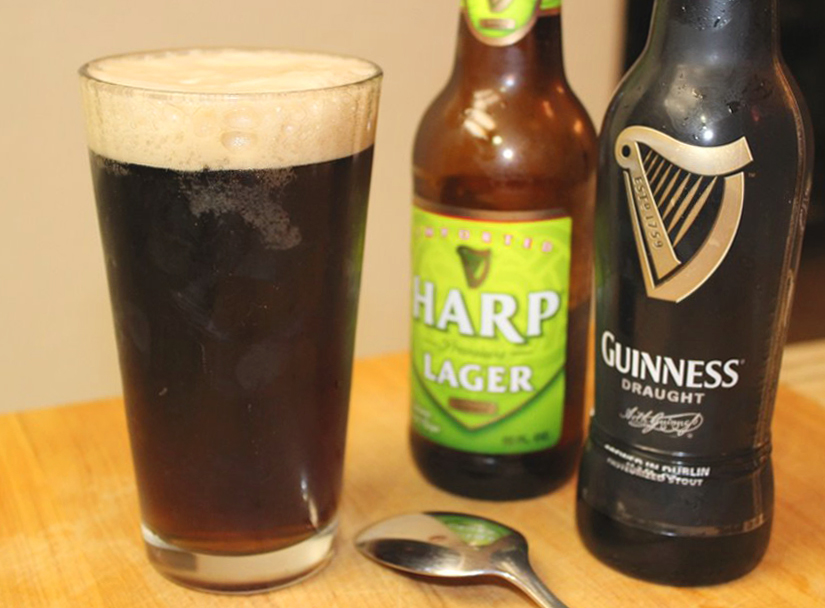
Pour the Guinness over the Harp Lager
Much-needed refreshment

We sat together in the hallway (dining table moved there in order to tile the floor of the dining room), eating our corned beef, sipping the beer, and admiring our newly laid tile.

“It looks so good, I think it was worth it,” Jan said.  I gave him a sideways glance.  “Worth the amount of work, and worth almost getting divorced,” he said with a smile.

I had to agree with him.  It did look great.  In retrospect, it wasn’t that bad.  Apparently we agreed on more things than we thought, including that the corned beef and cabbage was delicious.

While we might have only completed a fraction of our big project, and probably won’t lay another tile for another six months, we’ve got everything we need: a completed dining room, a completed living room, and 31 pounds of corned beef.
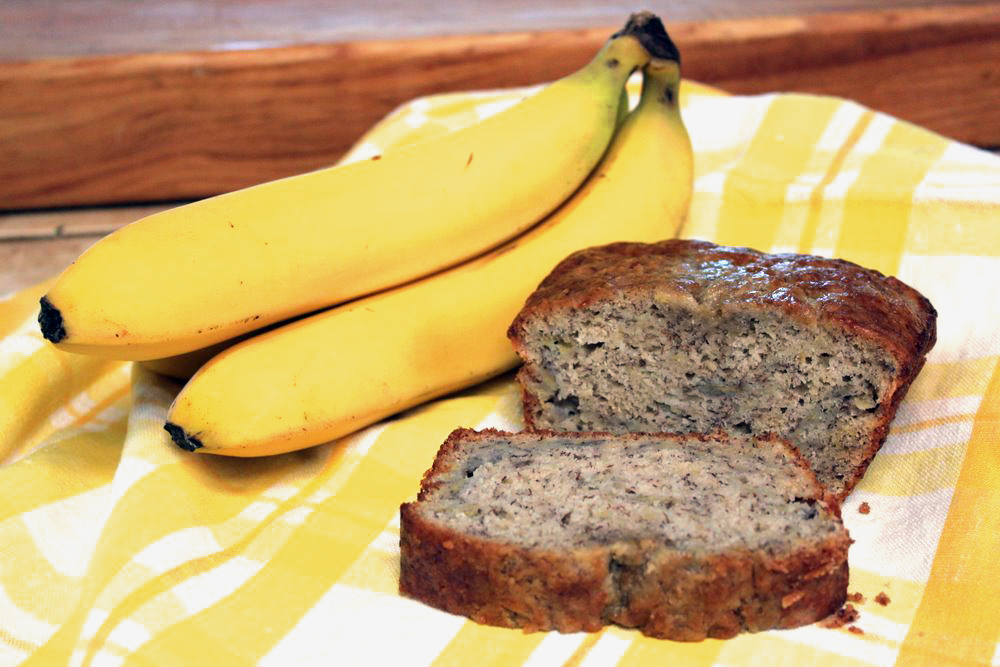
The Best Banana Bread

Ever since I was a kid, there have been a few people who’ve called me Anna Banana.  It’s not a nickname I mind, though I always found it funny that because my name is pronounced ah-na (the first “A” as in also vs. a short “A” as in and), it means pronouncing banana like you’re sipping a cup of tea with your pinky finger pointed up to the sky and a very serious expression on your face: buh-naw-nuh.

Maybe this helps explain my love for banana bread.  It’s so comforting and delicious, I have a hard time eating a reasonable amount in one sitting.  Because I once read the nutrition facts of this bread, I tried making a lighter version using egg whites and apple sauce—but never again—so not worth saving a few calories!

I’ve also tried versions including chopped pecans, as well as dark chocolate chips, but I think the plain version better highlights the gooey banana taste and texture.  Just be sure to use ripe bananas that are turning dark brown (the bananas in the picture at the top of this post are on their way to a banana bread in the far future, they need at least a week more of sitting on the kitchen counter top).  Here’s the original, and best recipe, and I highly recommend my new and improved spelling and pronunciation.

The slices were going quickly

“Bananna” Bread (Banana Bread)

Adapted from Better Homes and Gardens New Cook Book

print recipe

Ingredients

  • 1 ½ cups all-purpose flour
  • 1 ½ teaspoons baking powder
  • ½ teaspoon baking soda
  • ¼ teaspoon ground cinnamon
  • 1/8 teaspoon salt
  • 1 egg
  • 1 cup mashed bananas (about 3 medium)
  • ½ cup sugar
  • ¼ cup cooking oil
  • 1 teaspoon lemon zest

Directions

  1. Preheat oven to 350 degrees F and grease the bottom and sides of a 8”x4”x2” loaf pan, set aside.
  2. In a medium mixing bowl, combine all the dry ingredients (except the sugar): flour, baking powder, baking soda, cinnamon, and salt.
  3. In a small mixing bowl, combine the egg, bananas, sugar, cooking oil, and lemon zest.
  4. Add the egg mixture all at once to the dry mixture, stirring to until just moistened.  The batter will be lumpy.
  5. Pour batter into loaf pan and bake at 350 degrees F for about 50-55 minutes, until a toothpick inserted in the center comes out clean.  Cool for 10 minutes before removing loaf from pan.  Can be served hot, or wrapped in aluminum foil and chilled prior to slicing and serving (if you want smooth, neat slices).

Big Fat Success: Fat Tuesday Buns

If a dish has the word “fat” in the title, you know it’s got to be good.  Granted, in the case of Fat Tuesday Buns, the reference is to Fat Tuesday, a day allocated to gluttony and overindulgence, not the bun itself, but this Swedish treat still lives up to its name.

When you bite into a Fat Tuesday Bun, you will inevitably get whipped cream everywhere.  But the messiness makes it better.  And finally, after one disastrous attempt at making this dish last week, I achieved Fat Tuesday Bun success!

The first time around, I just couldn’t get anything right.  I’m still working on perfecting my recipe, but here’s what I did, just in time for Fat Tuesday (coming up next Tuesday, March 8).

Fat Tuesday Buns, or Semlor as they’re called in Sweden, are cardamom-spiced rolls filled with whipped cream and almond paste.  As a kid, the cardamom flavor was too strong for me, so my mom and I made plain rolls and followed the rest of the recipe.  I have a feeling that as an adult, (and the much more open-minded about different flavors person I’m slowly becoming,) I would probably feel less strongly about the cardamom as I did with my young taste buds.  But considering the baking disasters of last week, I didn’t want to take too many chances.  I thought, this time, I’ll make it the plain, old way, and do more experimenting on the next go around.

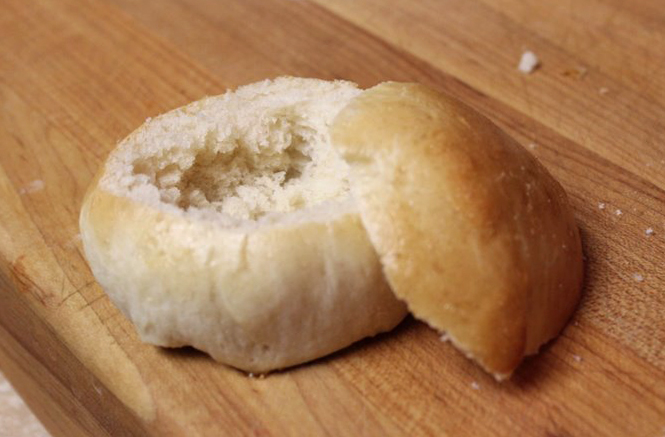
I used a recipe for plain dinner rolls from my Better Homes and Gardens cookbook.  I’m thinking that even the Pillsbury Crescent rolls should work well as another shortcut.  Just before putting the rolls in the oven, I brushed the tops of the buns with egg to make they would have that beautiful, golden crust on the top.  After baking and allowing to cool slightly, I cut the tops off the buns, making sure to keep the matching top with its corresponding bottom.  I scooped out the inside of the rolls, leaving a little less than ½” around the sides and bottom (think mini bread bowl).  Putting the scooped-out bread in a bowl, I moistened that with milk and combined with almond paste (you can also use marzipan, the outcome will just be sweeter).

Plain buns just out of the oven
Prepped and ready for filling

The filling went back into the hollowed-out buns, which were topped with whipped cream I sweetened with powdered sugar.  Each bun’s top was then placed atop the whipped cream, and the bun got a sprinkling of powdered sugar.  I didn’t wait long to take my first bite, but the remaining buns kept well in the refrigerator for several days. After enjoying this batch that stayed true to my memories from childhood, I’m ready to try making the more authentic cardamom version next.

One messy bite
Ready to enjoy

Crab Legs Save the Day

I had a disheartening day of baking.  (Note: if you just want to hear the crab legs, skip to the last paragraph of this post.  Keep reading to see why the simplicity of boiled crab legs is sometimes the only answer.)  I thought I would be brilliant and make Czech Kremrole, a cream-puff-type dessert Jan has been talking about wanting to eat for months.  I found a recipe in my Czech cookbook and Googled Kremrole, to see what the dish should look like.  I made a trip to Sur La Table to get stainless steel cannoli tubes around which I would wrap pastry dough, bake, then fill with whipped cream and top with powdered sugar.

It didn’t seem too tough, until I realized the dough the recipe book called “puff paste” was the painstakingly made puff pastry.  But I was determined to make these treats for Jan.  I made my two doughs, the butter dough and the strudel dough, and followed the tedious steps of folding the butter dough into the strudel dough, folding in thirds, thirds again, and refrigerating for an hour.  Three times I did this rolling-out, folding into thirds then thirds again, then refrigerating.  When it was time to wrap the dough around the tubes, everything looked beautiful as I placed them in the oven.

Despite following each of the recipe’s steps, the Kremrole was a disaster—the butter was literally melting off the dough and pooling in the baking sheet.  I can’t even share a picture, it’s just too sad to show.  To make matters worse, I realized I could have just bought premade puff pastry earlier in the day at the store.  But of course, that was before I read through all the recipe steps, experienced it firsthand, and now know that puff pastry is not something for the amateur to attempt at home (or else something that takes a lot of practice to master).

I thought I could save the day by making something else that involved filling a pastry with whipped cream, something I was craving, and that I’d made many times before.  Semlor, or Swedish Fat Tuesday Buns are the Swede’s version of indulgence before Lent, something my mom and I used to make every year around this time of year.  They are basically a cardamom-spiced sweet roll that has been filled with marzipan and whipped cream, and I thought I could redeem my failed cream rolls with a successful batch of Fat Tuesday Buns.

I baked the buns, no problem.  I cut the tops off the buns, removed the inside, and got to work making the filling.  Only problem was, I was distracted and grabbed the container of what I thought was powdered sugar in the pantry.  When I tasted my whipped cream to see if I’d achieved the correct level of sweetness, I knew something was terribly wrong.  It was then that I turned the container around to read the dreaded words: corn starch.

It was just not my day.  But then, as I too was about to turn into a sobbing mess of puff pastry gone melty and whipped cream gone chalky, Jan pulled out a 2 pound bag of snow crab clusters from Fresh and Easy.  In a matter of minutes, he boiled the crab legs, boiled some shrimp, and boiled some corn on the cob.  And the day was saved by Jan and a big boiled feast.  I was so hard at work with the shell cracker, trying to get the crab meat out so I could squeeze lemon juice on it and dip into melted butter, all my baking problems faded away.  Well, of course, after I strategized my game plan for reattempting those baking projects another day.

My Kind of Thistle

I’ve always loved artichokes.  It may have something to do with the fact that any time I’ve eaten an artichoke, there’s always another rich ingredient involved, whether that’s mayonnaise, butter, oil, or cheese.  Growing up, I dipped the leaves of the steamed artichoke in plain mayonnaise, scraping the soft bit at the bottom of the leaves with my teeth.  At a friend’s, I ate grilled artichoke drizzled with lemon butter, at home, marinated artichoke hearts from a jar full of olive oil.  And of course there’s always the wonderful spinach-artichoke dip that adds in cream cheese and Parmesan cheese.

But it’s not just the fattening toppings that make artichokes great.  There’s something special about them—not only do they look unique, but the way they’re eaten is also unusual.  Artichokes are thistles, plants whose flowers develop into large, edible buds.  And the first person to figure out that this scary looking thing was edible?  They were brave.  I love the earthy flavor of artichokes, and after recently learning that they are full of fiber and antioxidants, I feel even better about eating them.

Last year we planted an artichoke plant in our garden, which produced one large artichoke and one mini artichoke.  However, I left both on the plant too long, and they developed purple flowers at the top, becoming inedible.  The master gardener at the Vineyard Farmer’s Market said this particular plant would bear three artichokes the first year, ten the next year, and possibly more in the years after that.  With the plant now in its second year, I have high hopes for my ten artichokes (though they haven’t yet to make their appearance).

Artichoke growing in our garden

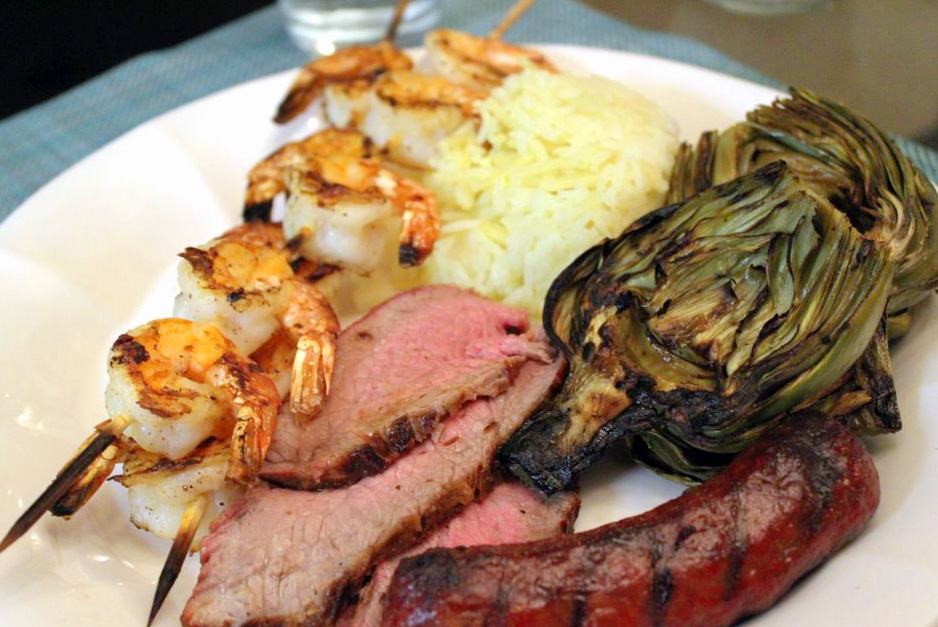
Though we’ve been using a gas grill for years, after the excellent dinner Jan cooked with an original Weber in Los Osos (see Favorite day in Morro Bay), he had to buy his own, and has been having fun lately using charcoal to barbecue just about anything.  I was skeptical of the artichokes that had been steamed to cook about two-thirds of the way (about 30 minutes), then sliced in half and finished on the grill.  But of course, they were excellent with the added flavor from the charcoal.

Great smoky flavor from the grill

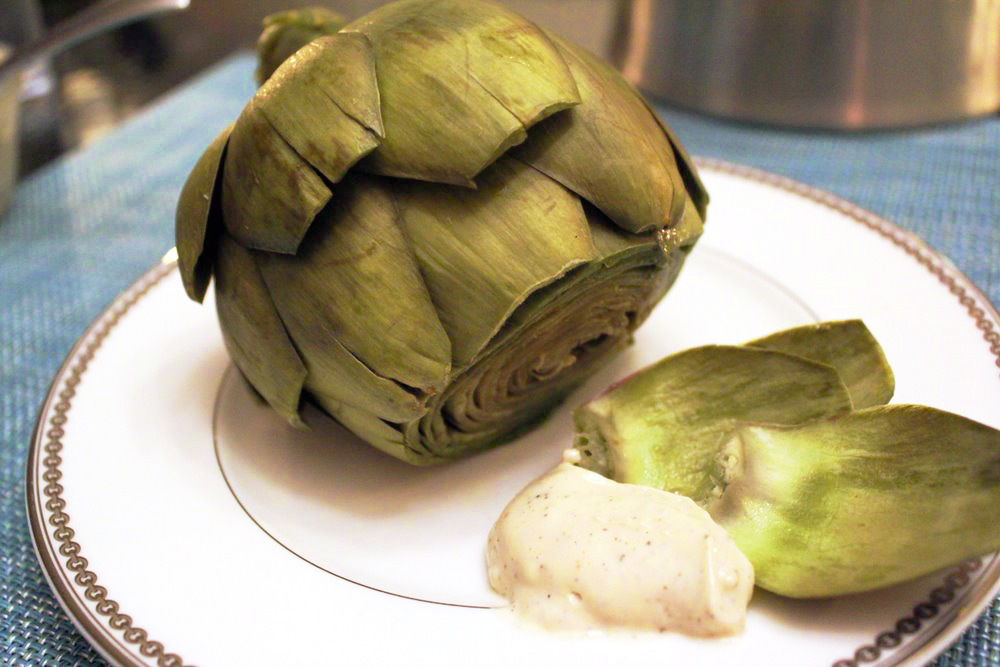
Still, my favorite way to eat them is the simple way.  I cut the stem to leave about an inch at the bottom, cut an inch off the top, and use scissors to cut the sharp points from the leaves.  Then the artichokes are placed stem-side up in a steamer basket and left to steam for about 50 minutes.  The artichokes are done when the lower leaves can be removed easily and are tender.

And continuing to keep things simple, the artichokes are served with balsamic-lemon mayonnaise, whose title reveals three of the sauce’s four ingredients.  Despite all the delicious possible ways to eat an artichoke, in my opinion, this is the easiest and best.

Balsamic-lemon mayonnaise

To be served alongside steamed or grilled artichokes

Print recipe

Ingredients

  • 5 heaping tablespoons light mayonnaise
  • ¼ teaspoon balsamic vinegar
  • ¼ teaspoon lemon juice
  • ¼ teaspoon finely ground black pepper

Directions

  1. Combine all ingredients in a small bowl and stir well.
  2. Refrigerate until ready to serve.

Browned Butter Brownies

When I saw the cover of February’s Bon Appétit, I knew the editors were speaking directly to me.  The cover of the latest issue proclaimed “Best-Ever Brownies,” with the warning: “You will eat the entire tray.”  The delicious-looking brownies exploded from the page, calling to me, and since had every ingredient I needed already at home, it was just a matter of time before I baked them.

But I spent a good week debating.  After all, with that kind of warning, I was scared.  I certainly didn’t want to eat the entire tray.  Then again, if I did, wouldn’t I only be following instructions?

I’m usually a lazy brownies-out-of-the-box kind of girl, with the exception of Blondies, which is the brown sugar version I most often make.  But the technique of the recipe reminded me of the Blondies (soon to be featured on the blog), since it started with melting the butter over the stove.  The recipes featured in the cover story were all about using unsweetened cocoa powder to make better chocolate desserts, and considering my love for dark chocolate, I had to give one a try.

I was warned that I would eat the entire tray

I cut the original recipe’s sugar down a bit, but not enough to change the consistency of the batter.  I also substituted pecan pieces for the original recipe’s walnuts, and ended up having to add 15 minutes to the original recipe’s baking time.

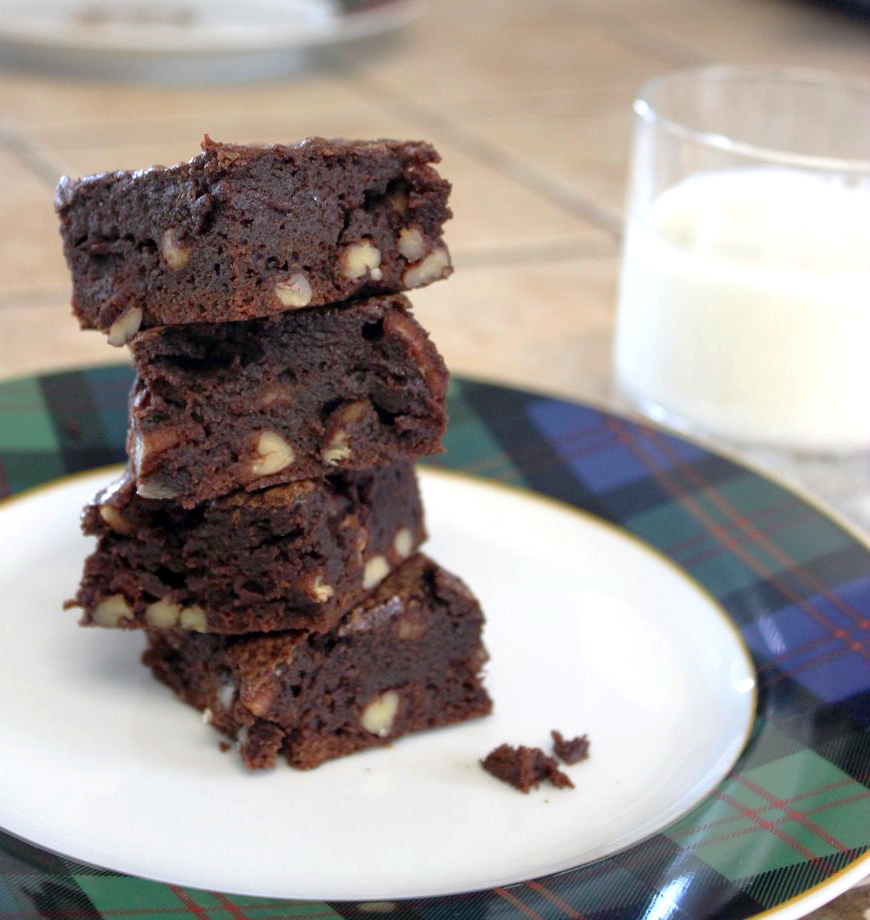
Browned butter brownies

Recipe adapted from the Bon Appétit recipe for Cocoa Brownies with Browned Butter and Walnuts

Print recipe

Ingredients

  • Nonstick vegetable oil spray
  • 10 tablespoons (1 1/4 sticks) unsalted butter
  • 1 cup sugar
  • 3/4 cup natural unsweetened cocoa powder (spooned into cup to measure, then leveled)
  • 1 teaspoon vanilla extract
  • 2 teaspoons water
  • ½ teaspoon salt
  • 2 large eggs, chilled
  • 1/3 cup plus 1 tablespoon all purpose flour
  • 1 cup pecan pieces

Directions

  1. Preheat oven to 325 degrees F.  Line an 8”x8”x2” pan with aluminum foil, allowing the foil to hang over the edges of the pan by about 1 inch.  Coat the foil with non-stick cooking spray.
  2. Melt butter in a medium saucepan over medium heat.  Stir constantly for about 5 minutes and remove from heat when butter stops foaming and small browned bits begin to form on the bottom of pan.
  3. Immediately add the sugar, cocoa powder, vanilla extract, water and salt.
  4. Allow mixture to cool for 5 minutes.  Then add eggs, one at a time, stirring until each is combined into the batter.
  5. Add the flour and stir until combined, about 80 strokes.
  6. Add the pecan pieces, and pour into pan.
  7. Bake about 40 minutes, until toothpick inserted in center comes out nearly clean (with only a few crumbs attached).
  8. Allow to cool in the pan, and remove by lifting the sides of the foil.  Cut into 16 squares.  Store airtight at room temperature.

Verdict: I did not eat the entire tray.  I ate three brownies; two right after the batch came out of the oven when the brownies were still warm and gooey, then one later once they had cooled (I had to make sure the final result was the correct consistency, right?)  The brownies were excellent, and now I can never go back to making brownies from a box.  They were that good.

As promised, they were the perfect blend of crispy top and fudgy center.  But the brownies were so rich and chocolatey, I don’t think I could have eaten the whole tray if I tried.  It was like my daily lunchtime dessert of one Dove dark chocolate square—satisfying, and just the right amount.  Unlike milk chocolate which just leaves me wanting more, the brownies were like the dark chocolate in that one small serving satisfied my chocolate craving.  Lucky for me (and everyone else with whom I could now share the brownie tray), I was more in danger of finishing the entire carton of milk.

Favorite Day in Morro Bay

Morro Bay, California gets to claim a lot of my favorite days, actually.  For me and Jan, it’s been host to relaxing weekends, our wedding, and even a lunch destination when we were craving fresh seafood and were willing to drive two-and-a-half hours to get it.

This past weekend we stayed at a friend’s beach house in Los Osos to celebrate our four year wedding anniversary.  We escaped the fog in Fresno for sunny and warm weather at the beach, accompanied by lots of great food.

Seagull scavengers at Giovanni's in Morro Bay

Our first stop in Morro Bay was Giovanni’s Fish Market and Galley, home of my favorite clam chowder and Jan’s favorite raw oysters.  The fish and chips is also excellent, and the attached market is the perfect place to buy a half bottle of wine for a picnic in the outdoor seating area overlooking Morro Rock (just remember to bring a corkscrew).  This time, there was something new on the menu that we just had to try: fried Twinkie.  Battered, fried, and topped with a sweet berry sauce, the warm, gooey dessert did not disappoint.

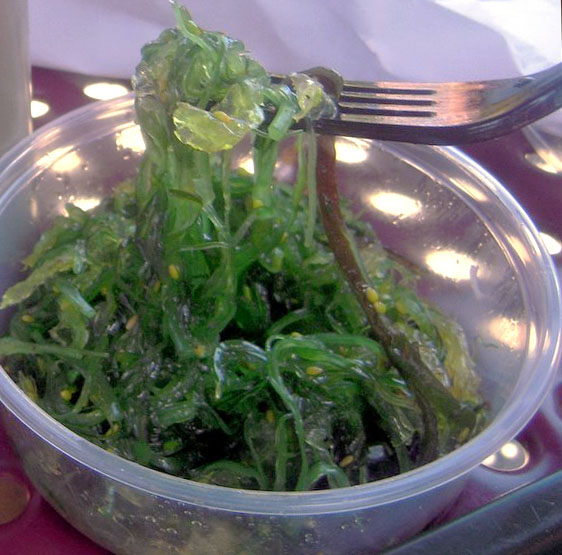
Seaweed salad at Giovanni's

Oysters at Giovanni's
The fried Twinkie

The next stop was Coalesce Bookstore and Garden Wedding Chapel to wander and reminisce in the garden, and report to the folks at the bookstore (and also our wedding officiants) that we are, in fact, still married.  The bookstore is a great place to stop even if you’re not getting married, as it regularly hosts concerts, classes, and of course, offers a great selection of used books.

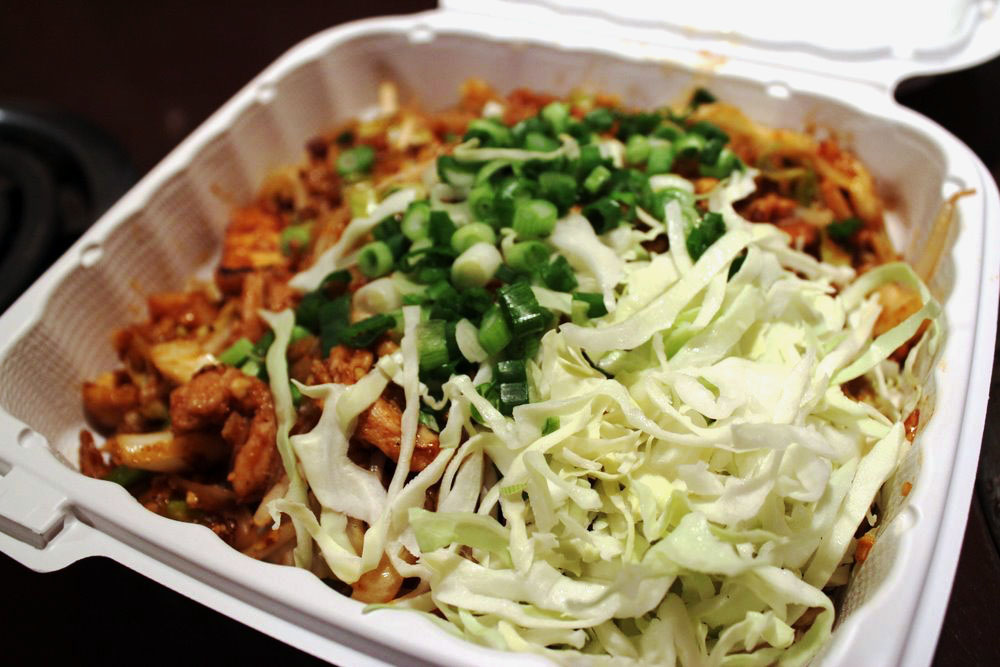
It was takeout for dinner from Noi’s Little Thai Takeout in Los Osos.  The restaurant has a small space and limited hours (Monday-Saturday 11 a.m.-7 p.m.) but makes some of the best Pad Thai I’ve had.  In addition to Pad Thai made with small rice noodles, chicken, egg, ground peanut, bean sprouts, and cabbage, we also ordered egg rolls and Pad Kee-mow, which is flat noodles with chicken, egg, chili paste, basil, tomato, red bell pepper.  I think when we were ordering the Pad Kee-mow and confirming that it was, in fact, spicy, we were actually ordering the dish extra spicy, which I don’t recommend.  The flavor was great, but I could only take a few bites before my mouth was on fire.

Takeout from Noi's: Pad Thai
Super-spicy Pad Kee-mow

The next day we headed to Cambria for lunch at Indigo Moon, a great café with fresh, simple dishes and a beautiful outdoor (heated) patio.  I ate a Cobb sandwich with grilled chicken, bacon, blue cheese, tomato and romaine on a warm ciabatta bun, with mixed green salad tossed with mustard lemon vinaigrette.  I was in sandwich love.  But I think Jan was even happier with his sandwich: duck confit, bacon and slaw served on ciabatta bun, with sweet potato fries and spicy pepper aioli on the side.

Cobb sandwich with grilled chicken, blue cheese, bacon, tomato and romaine
Duck confit with bacon and slaw, served with sweet potato fries

When it was time for the necessary walk on the beach, we headed to Cayucos, where the beach was populated only by a few other people.  When I spotted a swing set and no children nearby, I jumped at the chance to be a kid again, if only for a few wonderful minutes.

After a day of walking and eating, we were ready for some rest, so we headed to the grocery store so we could cook a relaxing dinner back at the beach house.  Jan bought a rib eye steak for us to share, spicy Italian sausage, prawns, a lobster tail, asparagus, and French bread.  We cooked everything on the charcoal grill while looking out on the ocean at night.  It was just the kind of surf and turf that perfectly completed the weekend.

Barbecue on the balcony
Rib eye steak and prawns

We didn’t make it to all our favorite stops on the Central Coast this time (not enough meals in the day!), but there are a few other favorite spots worth mentioning:

La Parisienne French Bakery located on the ground floor of the Front Street Inn in Morro Bay offers excellent desserts and pastries, and even has mini-sized cakes for the perfect two-person celebrations.

Tognazzini’s Dockside Too, is a fish market in Morro Bay offering outdoor dining, with live music on Saturdays and Sundays.  They make my favorite fish and chips.  The dining area offers dog-friendly dining, so when we’ve got Benny with us, it’s his favorite place too.

Jan likes to stop and get saltwater taffy to bring home to his brothers. Carousel Taffy in Morro Bay has giant bins full of different flavors, and you can try samples while you fill your bag full of all your favorites.

Canoeing and kayaking is a fun activity in Morro Bay, and it’s great to oar our way back to check out an alternate view of all the places we’ve walked before.  We’ve launched our own canoe from The Kayak Shack at State Park Marina, but rentals are also available there.

Sailor Benny hits the high seas (more like low tide in Morro Bay)

Driving north past Cambria, Sebastian’s General Store and Cafe is a great stop for beer and ice cream.  Open daily until 4 p.m. at W.R. Hearst State Beach, the café was recently remodeled and reopened, serving sandwiches made with Hearst Ranch beef.  It’s a great place to watch elephant seals in January.  And this section of beach seems to always be sunny when Pismo Beach, Morro Bay, and Cambria are overcast.

And we even discovered a new place to try in the future.  The Gold Rush Steakhouse at the Madonna Inn was not open when we peeked our heads in for a look, but with its pink booths and floral pink carpet, it’s at the top of my list for our next visit.

Thinking pink at the Madonna Inn in San Luis Obispo

Easy as Pie

A pizza pie, that is.  We used to mostly just eat pizza at a pizzeria or out of a delivery box, but now with so many more options for ready-made crust, it’s become one of our favorite things to make at home.  Before we discovered the refrigerated dough from Fresh and Easy, making pizza at home was this time-intensive process of making the dough, waiting for it to rise, and doing all this work before even getting to the fun part, which is putting on the toppings.  It was always worth the effort, but one of those things we just didn’t do very often because of the time involved.

But now, skipping all those dough-preparation steps gets us to the part we like faster—putting on the toppings—which is probably why pizza has been on the menu every week for the past month.  We’ve tried both the whole wheat and regular versions, and I think the regular dough comes out a bit crispier and crunchier (a good thing when making a thin crust pizza).

However, even though this pizza is easy, it’s not without challenges.  After letting the dough sit out for about 20 minutes before rolling out onto a pizza pan or stone, we face our first dilemma: deciding which toppings to use.  Our problem is that we always put on too much.  I’m convinced that my beautiful thin crust can’t stand up to the mountain of toppings always covering it, but it seems to be working out ok.  We bake the pizza longer than the suggested time of 10-15 minutes (about 20 minutes total) to get the crispy crust we like.  So, for about 10 minutes of work and some waiting time, we’ve got a simple, delicious dinner.

After topping with tomato sauce and cheese, the last pizza included: turkey pepperoni, spicy pork sausage, red onions, black olives, red bell peppers, mushrooms, and artichoke hearts.  You could hardly see the cheese underneath!  Jan says you can’t have too much of a good thing, but I think our next challenge will be pizza topping editing—paring down to fewer ingredients to get the best balance of flavors.  I’m always impressed by different and unusual combinations of toppings, but it’s hard to get out of our “combination” routine.  What other favorite pizza topping combinations should we try next?

Nypon Soppa, or Swedish Rose Hip Soup

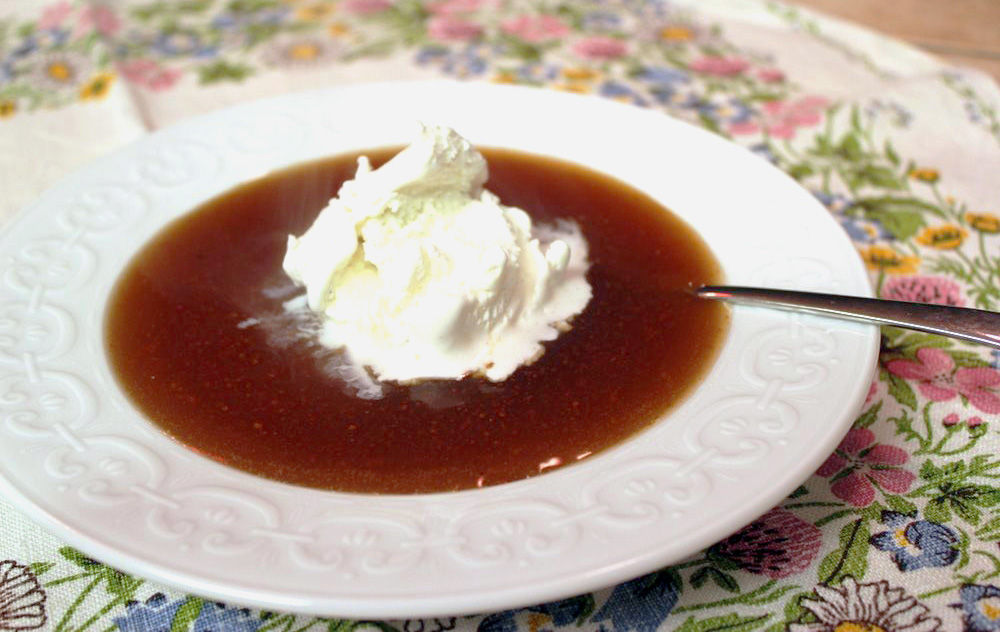
Nypon soppa is a Swedish dessert soup/drink made with rose hips and typically topped with vanilla ice cream, whipped cream, or vanilla sauce (vaniljsås).  It’s a dish that brings me instantly back to childhood, when my mom and I could whip up a batch in an instant thanks to the boxes of mix my aunt would send us from Sweden.

The ingredients in nypon soppa are minimal, and yet the fragrant smell of the rose hips can immediately conjure up an image of an abundantly green Swedish forest in summer, full of wild-growing fruits.  With melting ice cream on top, the perfect spoonful combines both the hot floral soup with cool, creamy vanilla.

http://en.wikipedia.org/wiki/Rose_hip
Wikipedia photo

Key among nypon soppa’s few ingredients are rose hips, which are the fruit of the rose plant that form after the flower has bloomed.  The seeds inside are used to grow a new rose plant, but whole rose hips including the seeds are also used in a variety of other applications including herbal remedies, teas, desserts and drinks. (see Wikipedia entry on rose hips)

Ekströms is a leading brand that makes both instant and premixed refrigerated versions of nypon soppa. (Think the Scandinavian version of instant Jell-O pudding, as far as ease and popularity.)  Every so often I see the box version (in which you just add hot water) at IKEA, but it’s been a while, and I’m guessing probably not one of their top-selling items.

To those who didn’t grow up eating it, it may both sound strange and taste stranger on the first sip.  Jan thought the mixture tasted like pure herbal tea when he first tried it, though an increase in the ice cream-to-soup ratio quickly upped the dish’s standing in his mind.

Many years ago, when my mom and I had run out of box mixes, we successfully recreated a close relative of nypon soppa that was my childhood favorite: kräm.  Kräm is a thicker version (more like a pudding than a soup), more often made with strawberries or raspberries, heated, and topped with ice cold milk.  We made the pudding with fresh strawberries, sugar, and potato starch.  However, since potato starch isn’t always easy to find, we decided that corn starch could probably be used in its place.

Back to the present day and missing the familiar taste of nypon soppa, my dad set out to devise his own recipe.  Once the rose hips were sourced, it couldn’t get much simpler: add water, sugar and cornstarch, and then cook until thickened.

Rose hips can be purchased at Whole Foods, and more economically on Amazon.com.  You can by the flakes or the powder, as both have been made from dried rose hips.  With the flakes, you will have to grind them yourself, but you will be rewarded with a fresher taste (just like grinding your own spices).

At a recent family dinner, my dad prepared nypon soppa for both sides of the family (except for Jan, all of Jan’s side had never had it before).  After one bite, my father-in-law was quickly reminded of picking rose hips in the Czech Republic many years before. Despite the taste being different from the usual dessert, he gave it his full approval, as did everyone else.

Nypon soppa

Print recipe
Ingredients

  • 1 quart water
  • 3 tablespoons rose hip powder
  • 6 tablespoons corn starch
  • 6 tablespoons sugar

Directions

  1. Grind rose hips into a fine powder using a spice grinder and measure out 3 tablespoons.
  2. Combine ground rose hips with sugar and starch.
  3. Pour into a saucepan that has been filled with cold water and stir until dissolved.
  4. Heat over low to medium heat until mixture thickens, about 10-15 minutes.
  5. Pour into bowls and serve hot, topped with vanilla ice cream.

Cornbread and Chili

With gray skies outside and only a few days of sunshine peeking through every so often, it’s been a couple of weeks for stews, soups, and chili.  Since everyone seems to have their favorite winning chili cook-off recipe, I’m starting out with cornbread, since for me, chili without cornbread is like a hamburger without a bun, apple pie without vanilla ice cream, cereal without milk; it just won’t do.

I’ve tried a variety of cornbread recipes ranging from the one on the cornmeal package to the recipes from several books, and it’s one of the simplest breads to make.  There are no critical times for resting dough, babying yeast, and too-early opening of the oven door, and therefore, perfect for me. Cornbread’s straightforward ingredients and process make it generally foolproof.  Its simplicity has provided the perfect jumping off point for experimentation, especially when I’m missing an ingredient or two.  One day I ran out of all purpose flour and substituted some whole wheat flour and a little more corn meal.  No problem!  It tasted great, and we enjoyed more rustic-looking bread, as the color was earthier, instead of the usual bright yellow.

Another time I ran out of sugar, and I used honey instead to another successful result, of course, with the distinctive flavor of honey.  I’ve been curious to make it with fresh corn kernels, but haven’t since Jan has voted against it—that may go over OK at Sweet Tomatoes, but he wants his cornbread smooth.

My current recipe is a result of several experiments, with the understanding that there will be more experimentation in the future, depending on what my pantry may be missing that day.

Cornbread

Print recipe

Ingredients

  • ½ cup all purpose flour
  • ½ cup whole wheat flour
  • ¾ cup cornmeal
  • 1 tablespoon sugar
  • 1 tablespoon honey
  • 1 tablespoon baking powder
  • 1 teaspoon salt
  • 1 egg
  • 2/3 cup milk
  • 1/3 cup vegetable oil

Directions

  1. Preheat oven to 425 degrees F.
  2. Grease a 8”x8” pan with butter.
  3. Mix together dry ingredients in a bowl.
  4. In a separate small bowl, combine the wet ingredients, then add to dry ingredients.
  5. Bake 25 minutes until golden.